



In northern Portugal, there is a town called Oliveira de Azeméis where a project run by the Teresian Association has been underway since 2014. This initiative provides socio-educational support aimed specifically at children and teenagers from families facing economic and social difficulties.
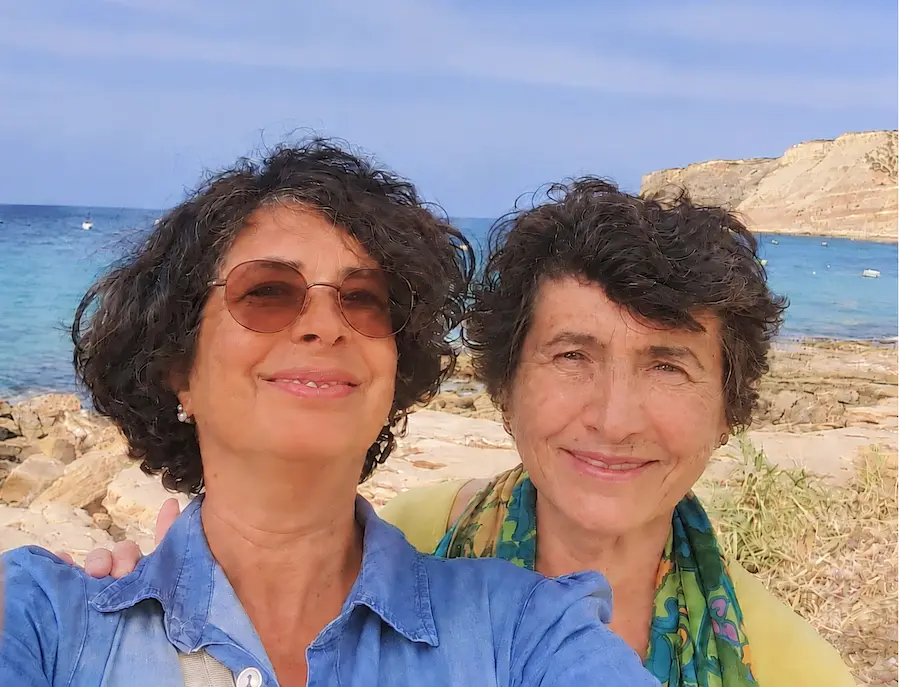
“The project carried out in Oliveira de Azeméis grew out of a history of commitment, generosity and fidelity to the TA educational and evangelising mission,” explain Anabela Rodrigues and Helena Henriques, members of the Teresian Association.
“Its origins were linked to the presence of a member of the Association of Cooperators of the Teresian Association (ACIT) who carried out important work in this town to promote human and Christian development. Their commitment left a deep mark, not only because of the work carried out, but also because of the individuals and families who identified with the values and spirit of the Teresian Association.
 As part of this legacy, the TA was given an apartment which provided them with an opportunity to continue the mission by addressing the specific needs of local families.”
From its inception on 9 March 2014, Anabela Rodrigues launched and coordinated this initiative. “It was more than five years of dedication, learning and commitment, during which I was able to work closely with the children, their families and the volunteers who made this experience possible,” she says.
“Over the course of those years, the project grew, not so much in terms of the number of participants, but in terms of human relationships, trust and our ability to respond to the needs of each child. It was a journey we built together, with difficulties, but also with many joys and small daily achievements.”
“Those five years were a deeply enriching experience,” continues Anabela Rodrigues. “Not only because of what we were able to offer the children and their families, but also because of everything I received from them and from the volunteers. It was an opportunity to live out, in a very concrete and simple way, the educational vocation and social commitment of the Teresian Association, following the inspiration of Saint Pedro Poveda.”
Her work as project coordinator came to an end in July 2019. In September of that same year, Odília Madaíl took on this role, continuing in it until her death in 2024. Currently, Adília Maia, a member of the TA (ACIT), has taken on this role, and once a month Helena Henriques visits the centre, where she stays for a week.
To gain a better understanding of the origins of this project, both Anabela Rodrigues and Helena Henriques have answered a series of questions for us, which shed light on the beginnings of this initiative, what they have contributed and what they have learnt along the way.
Why was the town of Oliveira de Azeméis chosen to launch this social project?
Oliveira de Azeméis is a town in northern Portugal with diverse social and economic conditions. This is where we met families living in vulnerable circumstances with limited financial resources and, in some cases, low levels of educational attainment. This situation made it difficult for many parents to help their children with their schoolwork, not because of a lack of interest, but because they lacked the necessary knowledge or resources to do so. It was precisely our proximity to these families and their difficulties that led us to consider what we could do.
So, on 9 March 2014, the initiative to set up a study support centre was launched, and it gradually took shape and became established over the following year. The Oliveira de Azeméis Project offered socio-educational support aimed specifically at children and teenagers from families facing financial and social difficulties.
From the outset, our aim went far beyond simply helping them with their schoolwork. We wanted to provide a welcoming, trusting and nurturing environment where every child would feel supported, valued and able to fulfil their potential.
The project was inspired by a conviction deeply rooted in the educational philosophy of Saint Pedro Poveda, namely that education is a key path to personal and social transformation.
How did you organise yourselves?
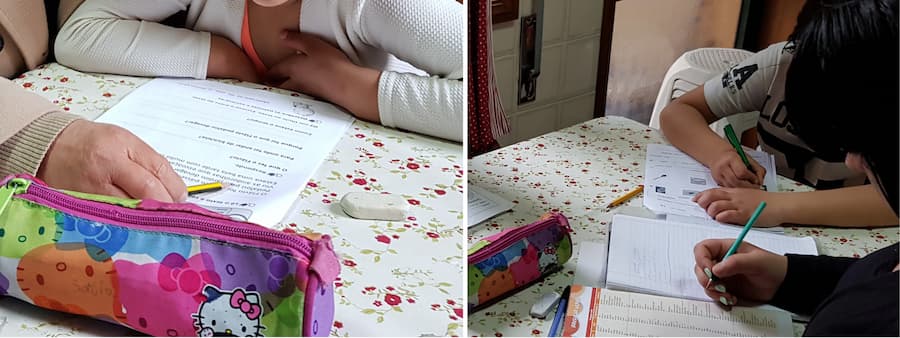
This initiative began very simply, with few material resources and a small group of children, but with great enthusiasm and the commitment of volunteers who believed in the importance of supporting them.
In its early years, between ten and twelve boys and girls took part, ranging from Year 1 to Year 8, supported by a group of six to eight volunteers. Some were university students, others young professionals, and there were also people with teaching experience.
One of the difficulties we encountered from the outset was ensuring the continuity of the volunteer programme. Many of the young people were studying and, during exam periods, were unable to maintain their usual involvement. Others, upon finding work, had to leave the project or reduce their availability.
This situation forced us to develop a great capacity to adapt, reorganising the groups, redistributing responsibilities and seeking out new people willing to help.
How was the space adapted to accommodate the children?
The space also had to be adapted to meet educational needs. The Teresian Association apartment was a home that, two afternoons a week, was completely transformed to welcome the children. During those hours, the house ceased to be merely a home and became a small educational space full of life, voices, books and exercise books.
The living room was mainly used by primary school children, while the kitchen and other areas were used by the older pupils. Every corner was put to good use so that everyone could find a place to study and receive help. 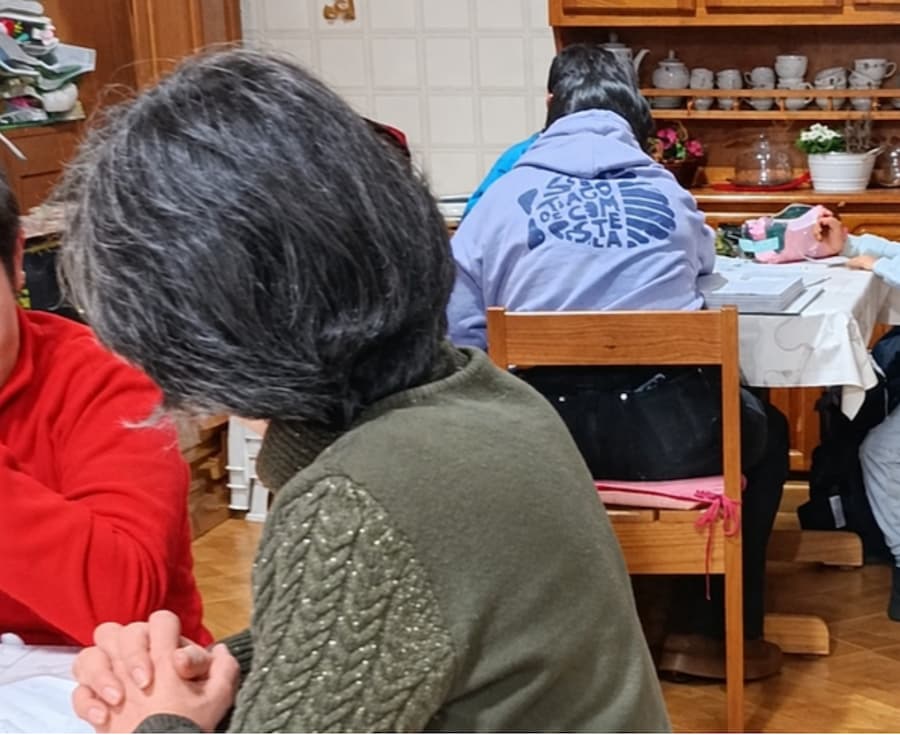
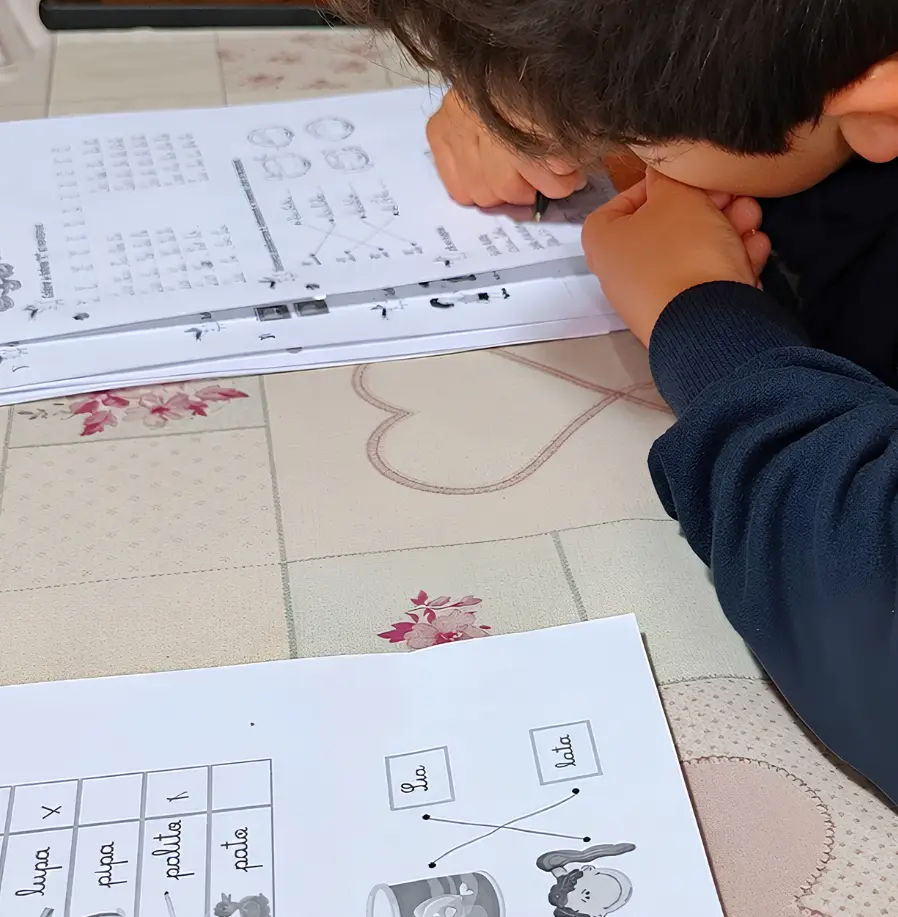
Using simple materials such as schoolbooks, exercise books, a blackboard, a computer with an internet connection and a small library, we tried to create a suitable environment for study and learning.
How did it evolve over time?
Perhaps the most significant development did not lie in the materials or the organisation, but in human relationships. Little by little, the children learnt to get on with one another, to respect each other’s space, to listen to others, to share resources and to understand that they were part of a group in which everyone was important.
We also discovered that simply helping them with their schoolwork was not enough. We needed to understand their difficulties, listen to their concerns, recognise their small steps of progress and build their confidence.
One aspect that became increasingly important was our relationship with the families. We wanted that space to be a meeting place too, where the children and their families felt welcome.
That is why we began celebrating the children’s birthdays. Christmas was also a special occasion. At the end of the school year, we organised a social and exploratory outing.
In this way, the project took on an increasingly holistic dimension, in which academic learning was complemented by education in values, social interaction, engagement with families and personal development.
Another key aspect was the support and training of the volunteers. Once a month, we organised a dinner with the whole team. Those dinners were much more than mere coordination meetings. They provided a space for coming together, socialising and shared reflection.
 What sort of educational support was provided?
The activities took place during the school year, from October to June, two days a week – on Tuesdays and Thursdays – for two hours each day.
The educational support was organised around various complementary initiatives, such as personalised academic support, developing study habits, promoting reading, and teaching values and social skills. It also included building self-esteem and confidence, as well as providing support to families.
How would you describe this experience as members of Teresian Association?
It was an experience that educated and transformed us. After those years of working together, one of the convictions that remained with us was that this project was not just about teaching, but also about learning together. It was an experience of intergenerational connection, of engagement with reality, and of voluntary service.
The Oliveira de Azeméis Project embodied the mission of the Teresian Association in a very concrete way: to be present in society, particularly through education, promoting the dignity of every person and helping to build a more humane, just and caring society.
Over time, we came to realise that the house, which two afternoons a week was filled with children, volunteers, books, exercise books, conversations and laughter, had become more than just a place for academic support. It was a space for coming together, for welcoming others and for shared growth. Because, deep down, educating also means sowing hope.
And now, what do the people who come to this space find here?
At present, the number of children and young people who attend this centre varies between 6 and 12, ranging in age from 6 to 15. The number of volunteers also fluctuates, usually numbering between four and nine.
Most of the pupils experience difficulties with learning, as well as with cognitive and emotional development. Some come from immigrant families who are in the process of integrating, and from families facing significant deprivation in various areas.
The support focuses primarily on helping them with their schoolwork, teaching them how to study, and managing emotional and behavioural issues. They need individual, personalised support. In addition, a small snack is always provided, which is essential for some children as there are cases of malnutrition.
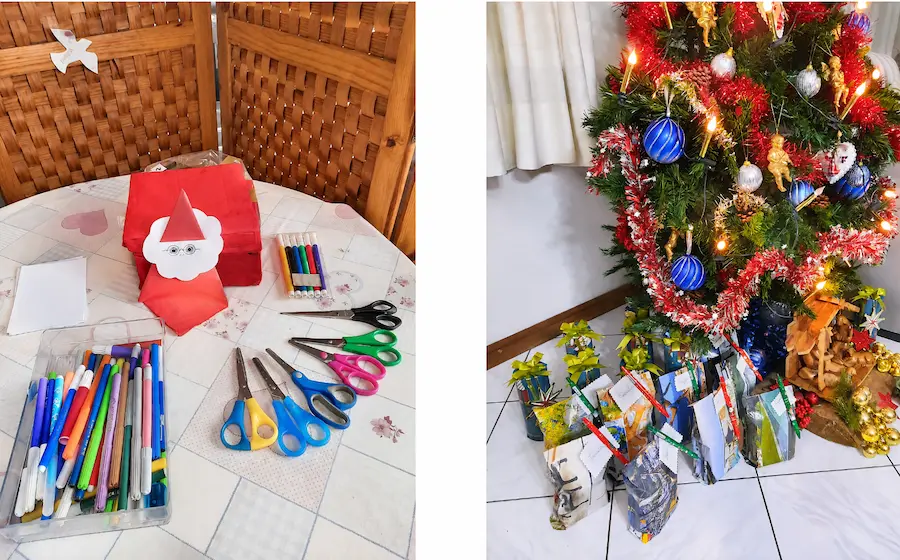
All of this is combined with the affection we show them. That is why we organise parties for their birthdays and at Christmas, and a small celebration is held at the end of the school year. Sometimes the only cake and the only present that some of them receive is at these celebrations. At the same time, we try to instil values such as responsibility, independence, respect, solidarity, participation, collaboration, perseverance and self-esteem.
What do both the beneficiaries and the volunteers tell you?
The feedback we receive from parents shows great appreciation for the work we do. They are grateful for and trust the support we offer. Some school teachers also let us know about the progress of certain pupils, including changes in their behaviour and improvements in their academic performance.
The pupils enjoy coming to the Poveda centre; they recognise the help we offer them, feel at ease, and are very affectionate and grateful.
St Pedro Poveda inspires us ito fulfil our mission within this educational setting where commitment to those most in need is a true embodiment of a form of education that promotes human dignity.
Anabela Rodrigues and Helena Henriques.
Info IT.
TA translation team.
 Published in News
Comments will not be posted automatically, they are subject to moderation.
The email address WILL NOT BE VISIBLE in the comments section.