



The Migration Network of the Teresian Association's European Platform has organized a new webinar entitled Migration and Europe, with the aim of creating a space for reflection and gaining in-depth knowledge of the political and social dynamics behind this complex reality.
Carolina Ramírez, President of ACIT Levante Norte, and Magdalena Alcover, from the Spanish Sector Council, welcomed the attendees and introduced the speaker, Óscar Mateos Martín, professor and researcher at the Blanquerna Faculty of Communication and International Relations of the Ramon Llull University in Barcelona. With a PhD in International Relations and postgraduate studies in Peace Culture, his research has focused on conflict, peacebuilding, and major global challenges.
In her introduction, Magdalena Alcover clarified that this online meeting is part of an ongoing journey they have been undertaking as the Platform for Europe, a journey that has recently taken shape in the Migration Network. “This path has emerged from shared discernment, from recognizing migration as one of the defining characteristics of our time and as a central challenge for our mission.”
Contextualizing migrations
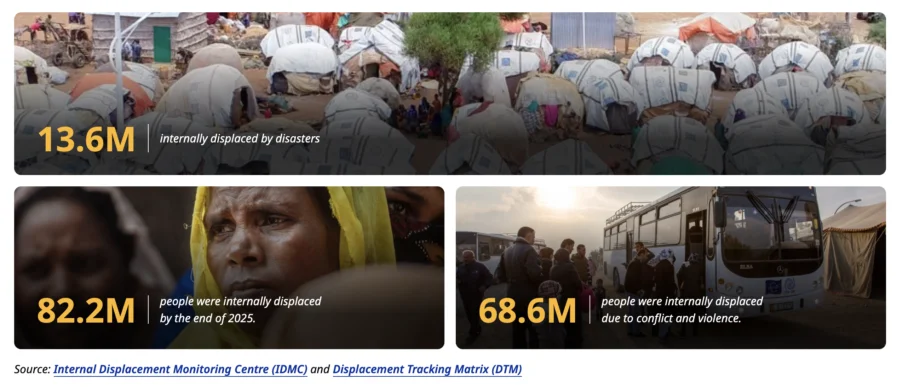
Óscar Mateos began his presentation by noting that migration has been on the European political agenda for over two decades and has shaped its priorities, particularly those of the European Commission and all its bodies. Since the 2006 Canary Islandsmigrant boat crisis, Spain began to view migration from a different perspective, both in Spain and across Europe. From that point on, migration policies emerged that framed it as a threat, a crisis, or a problem, reaching their peak with the Syrian refugee crisis in 2015.
“The legacy of these ‘crises’ has fueled the rise of the far right, which has placed the ‘migration threat’ at the center, and along with other elements has normalized a racist and xenophobic discourse and created a political and institutional agenda that prioritizes border control,” he noted.
“It is important to contextualize migrations to counter some discourses, and for this reason I consider it essential to adopt a long-term perspective, a long-term view, to understand its complexity.”
Keys
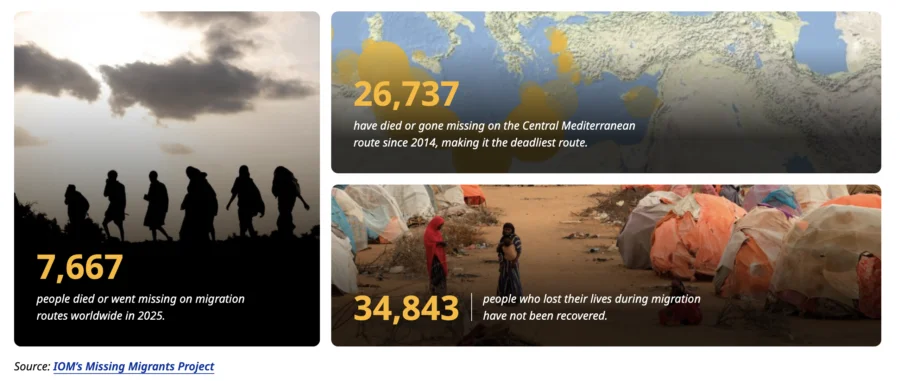
After clarifying some concepts, he offered five key points for understanding the migratory phenomenon. First, he emphasized that it is necessary to understand that migration has always been part of human history and has contributed to the development of modern societies.
Another key point is to remember that Europe has historically been a land of emigration. Between the mid-19th and mid-20th centuries, millions of Europeans emigrated to the Americas, Africa , and other parts of the world. In reality, Europe's transformation into a destination for migration is relatively recent, linked to post- World War II economic growth and the processes of decolonization.
Óscar Mateos indicated that if we analyze the data in relative terms, the proportion of international migrants has barely increased, from 2.9% to 3.7% of the world's population in recent decades (from 1990 to 2024). These figures contradict the idea that there is an unprecedented migration explosion. While it is true that the proportion is higher in Europe, having risen from 7% to 12.6%, it is still essential to contextualize the figures and avoid alarmist interpretations.
Another aspect to consider is that two-thirds of African migration occurs within the African continent itself. For example, South Africa and Ivory Coast are important regional migration destinations.
In this regard, he offered another key point: the majority of global migration is not international, but internal (80%). Billions of people move from rural areas to cities within their own countries. “This urbanization process is probably the fastest migratory transformation in human history and the most important of the 21st century.”
Finally, he analyzed the reasons why people migrate, which are not always due to poverty, but also because they seek job, educational, family, or personal opportunities. Many of the main countries of origin are middle-income countries and not necessarily the poorest.
The European response: fundamental debates
In the final part of her presentation, he focused on the European response to this reality and some of the main debates surrounding it. He spoke about the securitization of migration, one of the most significant changes in recent years, which arose in the wake of the September 11, 2001 attacks.
From this point on, many social phenomena began to be interpreted from a security perspective. “Migrations ceased to be presented as a human and historical phenomenon and gradually became a potential threat.”
He also alluded to the externalization of borders through agreements with countries such as Morocco, Mauritania, and Tunisia, with the intention that they manage and contain migratory flows before they reach European territory.
The way we talk about migration also matters. In recent years, political and media discourses have proliferated, presenting it as a threat to security, identity, or the economy. In his opinion, “the media and social networks have consolidated a toxic narrative of the migration phenomenon when, as has been seen, it is very complex.”
Therefore, he believes that one of the great challenges is to rehumanize the debate, giving visibility back to people, their life stories and trajectories.
There is also another debate concerning who belongs to a political community and under what conditions. In this regard, it was mentioned that migration has a widely recognized positive economic impact. The Bank of Spain estimates that between 2022 and 2024, a significant portion of Spain's average annual GDP growth is linked to the contribution of the foreign population. However, significant disparities persist in access to rights, participation, and recognition. This forces us to question to what extent rights should depend on nationality, passport, or a person's economic value.
In closing, the expert asserted that it is essential to study how we respond to migration challenges, because this response will define the kind of societies we wish to build. The fundamental question, therefore, is not only how to manage migration, but what changes we are willing to implement to build a fairer, more humane, and more dignified world for all people.
The webinar ended with a short discussion where different reflections were made based on the migration experiences lived in each region.
We offer here the webinar registration, which has been translated into English with the help of AI tools.
Photos from UN Migrations website.
TA Info.
 Published in News
Comments will not be posted automatically, they are subject to moderation.
The email address WILL NOT BE VISIBLE in the comments section.