



On Saturday, July 22, the second lecture of Fr. Javier Sancho Fermín, OCD, programmed by the TA in South Florida (USA), took place as part of the Centenary of the Pontifical Approval celebrations. The theme was Baptism, and mystical vocation, identity of the lay Christian.
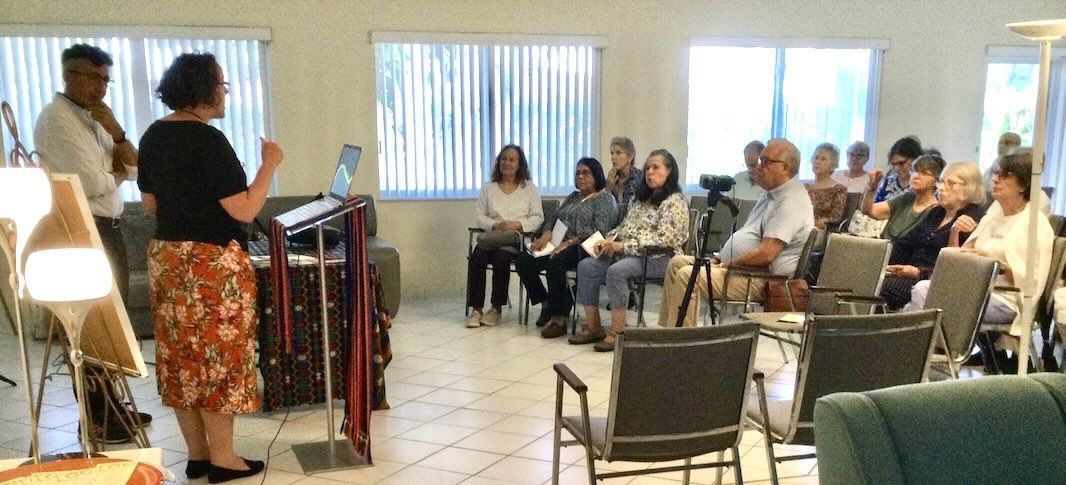
Baptism as a gift of fullness already received and the call to live it for all those who recognize themselves as consecrated, chosen and children of God, has been the focus of the presentation of Fr. Javier Sancho Fermín OCD at the Poveda Center in Miami and also followed on the internet by other people from different places.
This conference, completes the cycle of two meetings under the title Teresa of Avila and Pedro Poveda: Wisdom for the Laity, today. After presenting, on the 15th, the topic on The Teresian humanism that Pedro Poveda fell in love with, the speaker continued to broaden the view of these two saints whom he described as “geniuses of the simplicity of the Gospel,” capable of centering on the essentials of Christian identity.
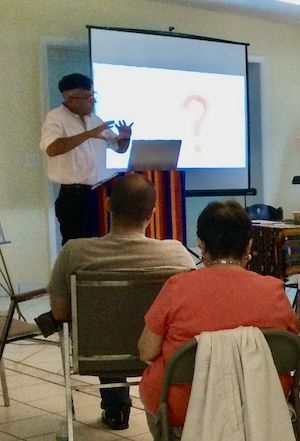 Baptismal vocation
In the first part of this conference Javier Sancho, for years director of the CITES in Ávila Spain, indicated that “although Teresa wrote for her nuns, she did so thinking about Christians, concerned about what was happening in her time. Like Poveda, Teresa was concerned that there are few true friends of God.
Hence the importance of talking about the baptismal and mystical vocation of all the paptized. What does it mean to have been baptized, to be consecrated? A word that has been hijacked by religious or priestly life, Fr. Sancho said, something that is not in the vision of Poveda or Teresa. A term that invites to follow a positive path, not of making vows but of living evangelical counsels, as a process of humanization. And this is for all the baptized. To live as the first Christians, as Poveda insisted.
In the second part of his presentation Javier Sancho referred to the symbol of the silkworm that turns into a butterfly of wich Teresa writes about in her book The Interior Castle. Baptism, the priest said, “has the power of metamorphosis and there is no turning back”. As we say in this sacrament: “I baptize you in the name of the Father, the Son and the Holy Spirit. The Trinity embraces me, takes possession of me.”
That is why Teresa understands that in the seventh dwelling place of her Interior Castle, union with God, is already within oneself. It is what we are by baptism. “This is what prayer is for, so that works are born,” says Teresa. Our identity: to project it in our life, transform ourselves in order to transform.
Intelligence
In modern terms, Father Sancho situated this process as an integration of the different forms of 'intelligence' about which much is written today.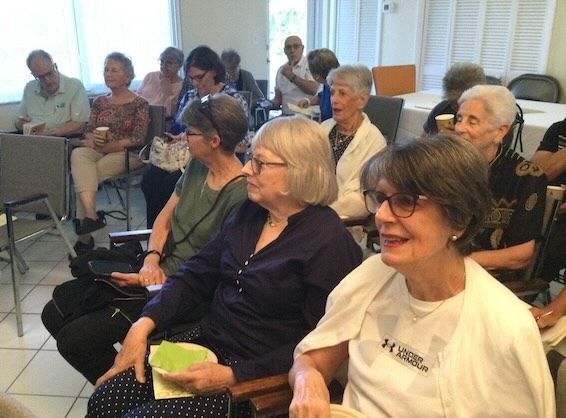
- A rational intelligence that develops with one's own knowledge and openness to the truth. Perceiving reality, dialoguing with it.
- An emotional intelligence by discovering the beautiful and positive aspects of our being, because our emotional dimension is enhanced and developed from a positive perception of myself, anthropologically: image of God and theologically: sin is already erased by baptism, although its consequences may persist.
- And at the center of all this, the spiritual intelligence of the commandment of love.
Enhance my entire being
In Teresa's logic, the priest said: “The more I know myself, the more I love. The more I love, the more I need to know and the more I open myself to the dimension of God that is happening in me and loving me, the more I open myself to a perception of life and of reality in an integrative perspective.”
“Spiritual intelligence as a dimension of harmony of unity in everything, with everyone, with the All. Which makes the life of the lay person, if it develops fully, a joy, because it aims to enhance my entire being.”
It is not an obligation to live like this, the speaker explained. “The project is proposed to us to live the fullness of that humanity. The humanism-truth intuited by Poveda and also developed by Teresa that configures the way of being and living of the lay person, of the Christian, in the world and in society.”
Here you can listen to the Spanish audio of the two segments of the conference.
Araceli Cantero, Miami.
 Published in News
Comments will not be posted automatically, they are subject to moderation.
The email address WILL NOT BE VISIBLE in the comments section.