



The Governing Council of the Teresian Association has announced the appointment of Vera Maria Ferrão Candau as an emeritus member of the Commission of the Socio-Educational Proposal of America.
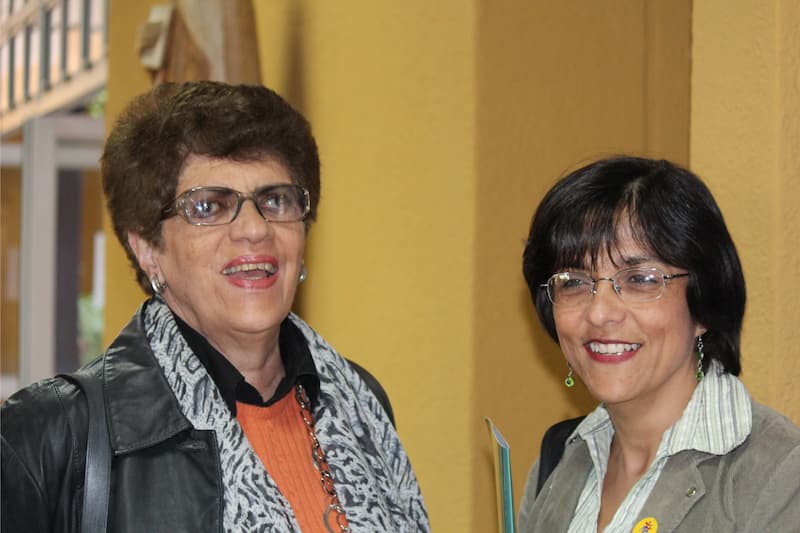 Vera Maria Ferrão Candau with Consuelo Vélez.
As reported by the Governing Council, this decision has been taken for several reasons but, above all, for "its enthusiasm and ongoing commitment to the educational mission of the Teresian Association in all the countries in where it is present on the American continent".
In addition, having concluded her duties as a member of the PSE commission over the course of several terms of office, the appointment of Vera Maria Candau as an emeritus member of the same is a way of "highlighting her inspiring and fruitful presence, which does not end with the conclusion of her mandatory terms of office, but continues with God’s grace".
Latin America
Vera Maria was the first person to interpret of Poveda's pedagogy from the perspective of Latin America reality, which constitutes an important and fundamental contribution to the understanding of educational proposals contextualized in the Latin American reality. Furthermore, she has continuously maintained update of these interpretations in line with the educational challenges of each era.
It was she who, at the Council for Culture Seminar held in Cochabamba (1998), put forward the idea of carrying out a reflective, critical and systematic analysis of the educational work of social centers and projects in Latin America, which gave rise to the PSE.
From then on, the Poveda Center in the Dominican Republic was commissioned to draw up this proposal, and Vera acted as an adviser to the team working on this inicitiual document. The result of this process was the book Educating in difficult times: A Socio-educational proposal from the Teresian Association in Latin America, presented at the seminar held in the Dominican Republic in 2002. That same year, the PSE International Advisory Committee was established, coordinated by Vera until 2020.
Vera has been a cornerstone in the realisation of all this work, providing direction, focus and a critical perspective, both in the present and for the future, for the guidance and educational contributions of the ongoing formation of educators, as well as for the promotion and development of PSE in each context anf country, building on the work of each person responsible for driving internal processes in the respective countries.
Socio-educational movements
In its statement, the Governing Council clarifies that it is important to highlight the vision of the ‘Educating in Difficult Times’ Socio-Educational Movement (MSE), which is also inspired by the thinking of Pedro Poveda, through the drafting of its Charter of Principles, presented at the Lima Seminar in 2007, which recognises the importance of socio-educational movements as a fundamental means for the ongoing formation of educators and for influencing public policy. The MSE brings together a diverse range of educators, in addition to those working in the institutions supported by the Teresian Association.
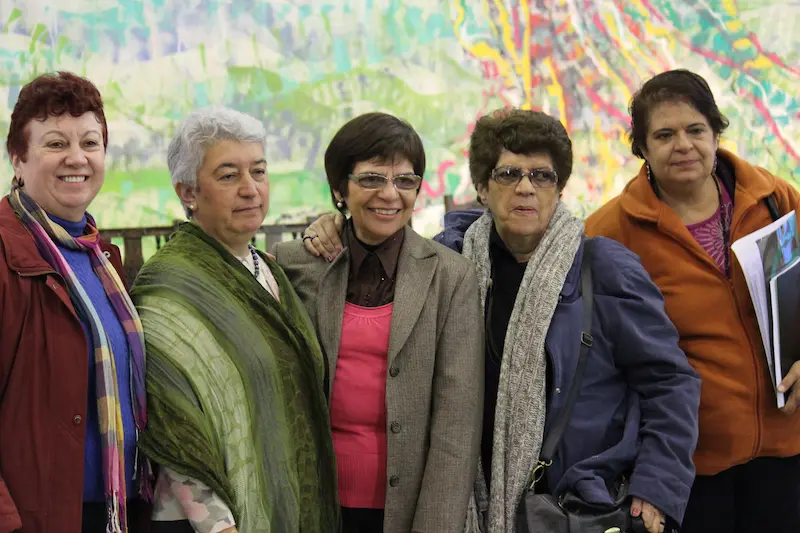 National Education Congress held in Chile in 2011.
As coordinator of the Commission, she also spearheaded and promoted all publications, thereby valuing the written word and reflection, with the aim of systematising, contextualising and publicising the process experienced through the PSE.
The Governing Council. IT Info.
 Published in Outstanding