



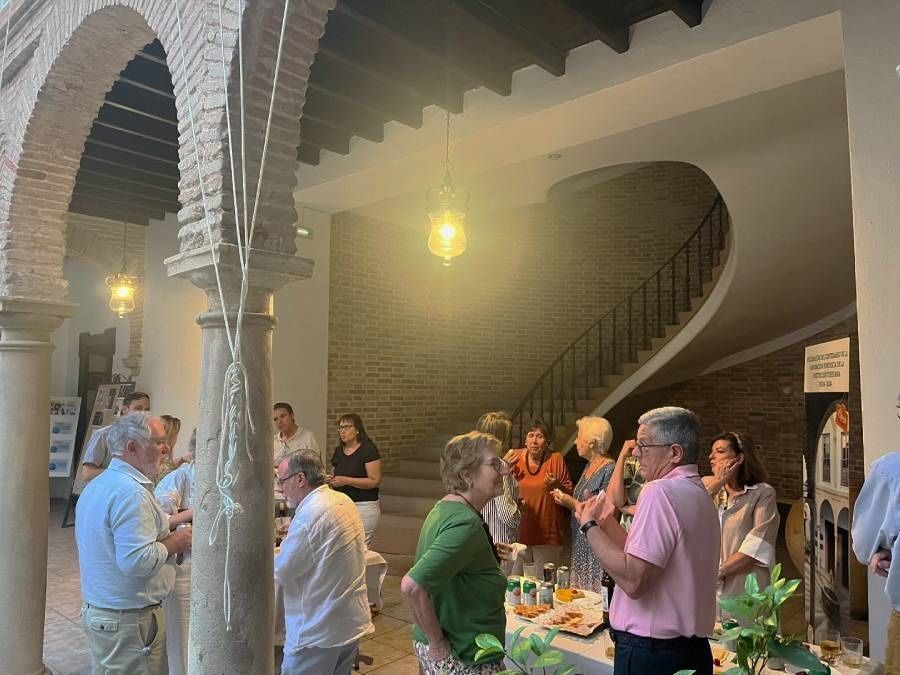
Activities have concluded for this academic year in the Espacio Cultural Plaza de la Concha in the Spanish city of Cordoba. This cultural centre run by the Teresian Association has held several conferences, and the last three of these are now available on the centre’s YouTube channel. In addition, a number of people connected to the centre held a small celebration in the courtyard to mark the end of this chapter.
Getting to know the brain
Montserrat Escribano, a theologian who holds a PhD in Philosophy, gave the second session of the seminar on "Neurotheology: a proposal to rethink the human” on 9 May. The first session had taken place on 25 April, and future sessions will be on 26 September and 31 October.
In this second talk, Dr Escribano spoke about the origin of neuroscience and how there is a growing interest in improving knowledge about the brain. In this regard, she said that although much progress has been made in recent years, very little is still known. Today there are many people who suffer from neurological diseases. In Spain alone, there are 23 million people affected by these pathologies, which means half of the population.
She pointed out that trying to understand the brain is a way of trying to understand who we are, and the disciplines that are dedicated to this should converge. In this sense, she alluded to neurotheology as a proposal for thinking about the human. 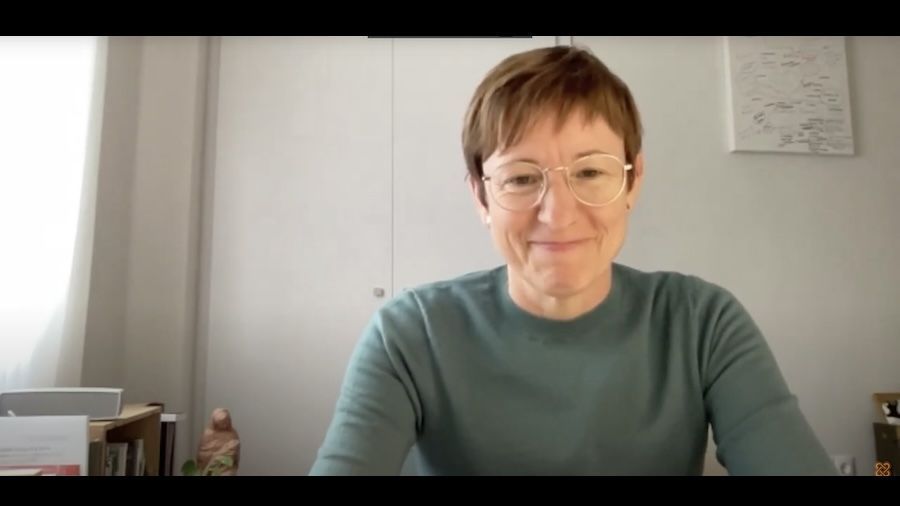
“We are moving closer to ground-breaking discoveries,” she said. “When we talk about the brain we are really referring to our inner self for which our relational environment plays a key role.”
The Mary stereotype
A conference was given by Consuelo Vélez Caro, theologian at the Pontifical Catholic University of Rio de Janeiro, on 16 May. As part of the seminar “New responses to current challenges”, she chose the thought-provoking title, “From the Virgin Mary as a demi-goddess to Mary of Nazareth as our sister.”
She used different perspectives and a feminist approach in her presentation on how the figure of Mary can be regarded. From her point of view, Mary is the perfect image of a disciple for all members of the Church. “However, unless there is a change in the way Mary is currently perceived, it will be very difficult to move towards a synodal Church, and it will also be difficult for young women who do not coincide with the feminine stereotype of Mary that still remains, to join in ecclesial activity.” 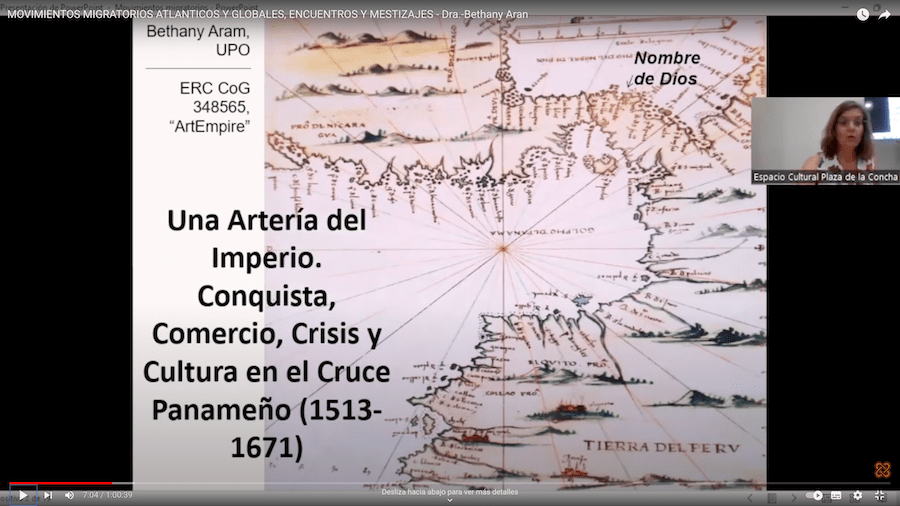
Migratory movements
Finally, on 30 May, Bethany Aran, Professor of History at the Pablo de Olavide University, gave a lecture as part of the “Challenges and Interests of Society” series.
Entitled “Atlantic and global migratory movements, intermingling and mixing of races”, the professor gave an overview of the movements of people between the 16th and 17th centuries. She focused on the Panama area, and explained in detail how several continents were able to interact with mobility and social interaction.
Further information is available on the YouTube channel of the Espacio Cultural Plaza de la Concha de Córdoba.
Info IT.
 Published in News
Comments will not be posted automatically, they are subject to moderation.
The email address WILL NOT BE VISIBLE in the comments section.