



The Andalusian and Bolivian delegations of the NGO InteRed have organised a webinar to present the objectives and results of a project carried out in the Guaraní village of Chuquisaca (Bolivia) to combat gender-based violence.
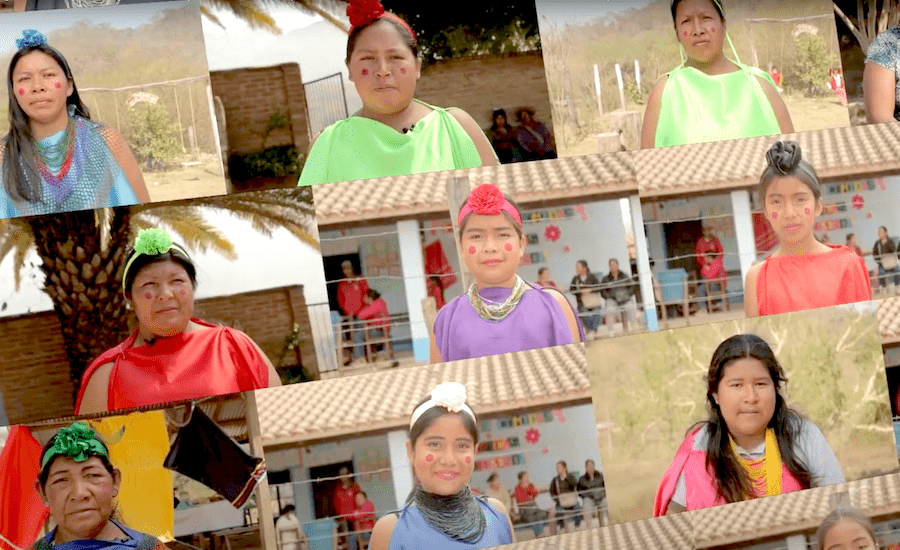
Guaraní women: promoting community responses to gender-based violence (VdG) was the title of this webinar. It presented the achievements, benefits and difficulties of this project, which began on 1 February 2023 and is scheduled to end on 31 March 2025.
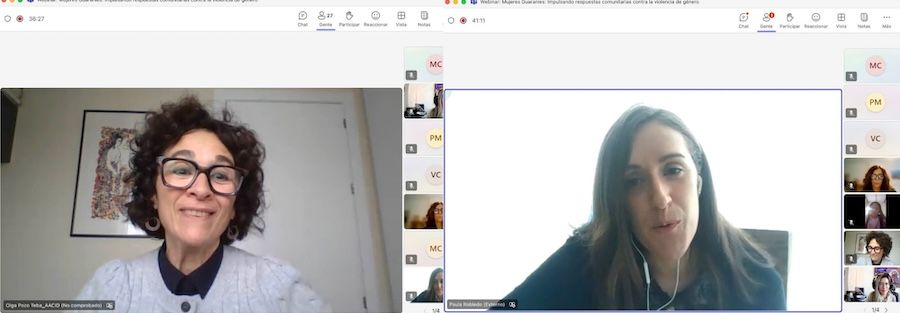
This initiative is funded by the Regional Government of Andalusia. In fact, Olga Pozo, head of the International Cooperation with Ibero-America Unit of the Andalusian Agency for International Development Cooperation (AACID), was present at the online meeting: ‘The work being done in Bolivia is impressive, as well as complex,’ she said in her speech. She added that it is ‘a project in which women have been the protagonists and which has pursued a common goal: social justice.’
After a brief introduction by the head of InteRed Andalucía, María José Herrera, the head of InteRed Bolivia’s gender department, Paula Robledo, outlined the key aspects of the context in which this action has been developed.
Community-based
Firstly, she pointed out some unique features. One of these is that the project has worked directly with a community-based organisation: the Council of Guaraní Captains of Chuisaca (CCCH). In other words, it has worked with the indigenous people themselves, rather than with local NGOs, as is usually the case. This has had an impact on methodologies and strategies.
The project has mainly addressed violence against women in a complex cultural context where this type of behaviour is normalised. In addition, other forms of oppression affecting women in the area must be taken into account, such as rural life, poverty, discrimination, social classes, etc.
For all these reasons, the main objective has been to contribute to a life free of gender-based violence for the indigenous Guaraní women of the Chaco Chuquisaqueño. Throughout this process, community promoters have played a crucial role in identifying violence and acting as intermediaries. Thanks to them, women who have been assaulted can now receive care in the community.
Empowerment and promoters
 According to María José Olivera, coordinator of the CCCH project, this initiative has succeeded in empowering Guaraní women and has brought about significant changes in the way both women and men think, as well as their own families. "Here, women suffer more not only because they are women, but also because they are indigenous and poor. Guaraní culture is completely sexist and we are considered to be far below animals. It has been a huge challenge for the CCCH as it had never worked with gender-based violence before, something that was not even considered a crime."
During her talk, she commented that within the community they had to work with seven men and one woman. However, in the end, ‘the captains have recognised this violence and awareness has been raised.’
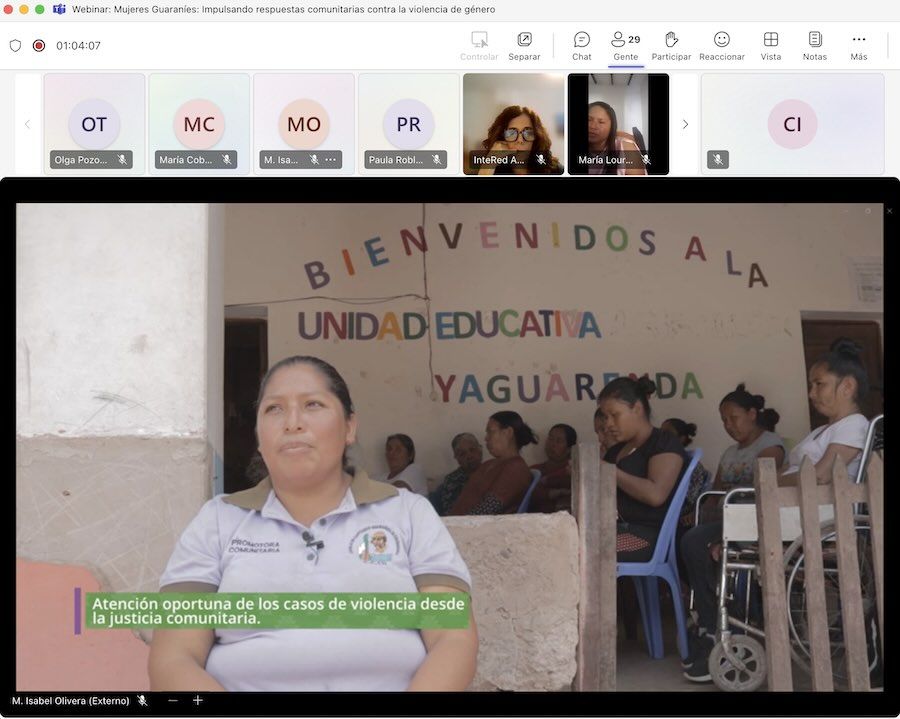 Now they are fighting to improve certain regulations so that penalties are regularised. In fact, a review of the organic statutes has been promoted with regulations that punish gender-based violence. A Law on Care for Victims of Gender-Based Violence is being promoted in the municipality of Huacareta.
At the same time, the Guaraní system has legitimised women's advocates and the system for protecting women against this violence, which has been developed over the years (creation of the Critical Care Route).
The webinar concluded with a presentation by Mª Lourdes Chávez Pinto, one of the Guaraní promoters. She explained how they are chosen – democratically in assembly – how they operate and her personal impressions: "We have lost our fear of speaking out and have learned a lot about empowering women. We have taught our families and men how we should respect each other. We have become stronger thanks to this InteRed project."
Vídeo
During the online event, the systematisation video produced by InteRed in collaboration with the Regional Government of Andalusia, which was launched a couple of months ago, was shown. This multimedia production summarises the essence of the project:
(You may turn ON the automatic translation.)
TA Info.
TA Translation Team.
 Published in News
Comments will not be posted automatically, they are subject to moderation.
The email address WILL NOT BE VISIBLE in the comments section.