



In Bethlehem and Jerusalem, members of the Teresian Association addressed the need for interreligious dialogue (IRD) with an open mind and a solid foundation during a series of meetings held on 7 and 9 May.
During our planning session at the start of the schoolyear, members of the Teresian Association in Bethlehem and Jerusalem marked the 7th of May in our calendars that stated “A Talk on IRD” choosing to invite Fr. Garrett Gundlach, a Jesuit priest teaching at Bethlehem University to explore Muslim-Christian relations especially in the context of the Holy Land, still reeling from the vestiges of war.
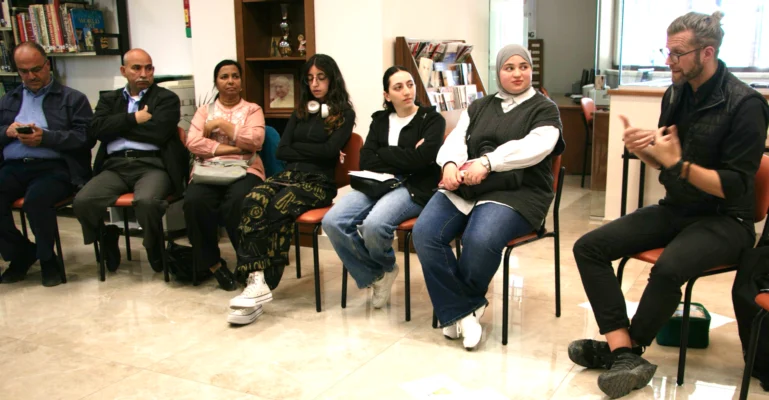
Building bridges
Among the essentials we learned is that listening, better still, learning how to listen, opening our hearts to the reality of the other with respect and understanding will help build bridges of trust that can lead to dialogue.
Father Garrett’s talk was both grounded and down-to-earth. There was no “elitist” talk on differences of religion, instead he shared the following helpful insights that serve as solid pathways to a more balanced, open-minded well-being, leading to an interesting, enlightening exchange of day-to-day life experiences among the participants.
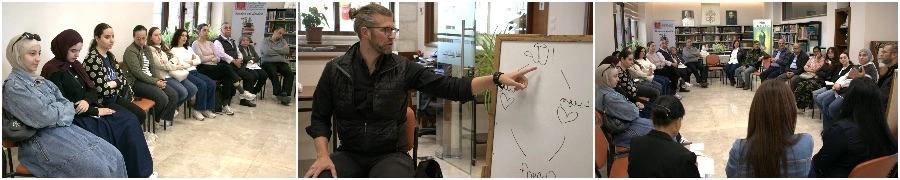
Key ideas that are necessary to recognize to be able to move forward:
→ We worship the same God as our Muslim neighbors, even if we emphasize very different aspects of this God.
→ God is at work in Islam!
→ Key questions I ask myself about Muslim-Christian dialogue: Who are my Muslim friends? What do I love about Islam and Muslim life? What can I learn about God from Islam and Muslim life?
→ This friendship then leads me to ask: What do I love about Christianity and Christian life? What can I share about God from a Christian perspective?
And as one of the participants rightfully reminded us, the same “key ideas and questions” can be asked and applied, if we think of our other brothers and sisters in Judaism as well (in fact in almost any other faiths, such as Buddhism and Hinduism, etc.).
Hence, these key questions and statements paved the way to sharing how, in the context we found ourselves, respect for and friendship with the other, whom we have grown up side by side, or study and work with, are actually our “daily bread.
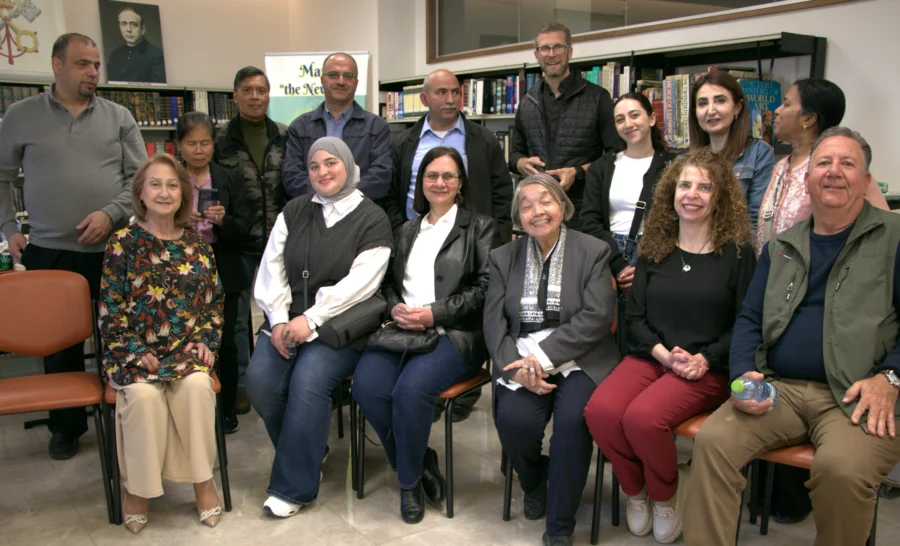
With the Patriarch
In like manner, the TA members heeding the call and invitation of the ecclesial groups to have an encounter with the Latin Patriarch, Cardinal Pierbattista Pizzaballa, to take up his latest pastoral letter entitled “They returned to Jerusalem with great joy, A proposal for living the vocation of the Church in the Holy Land,” joined them on the 9th May, Saturday. The Eucharistic celebration was concelebrated by priests of the Neocatechumenate at the “Domus Mambre” in the site where the Maison D’Abraham is located, northeast of Jerusalem.
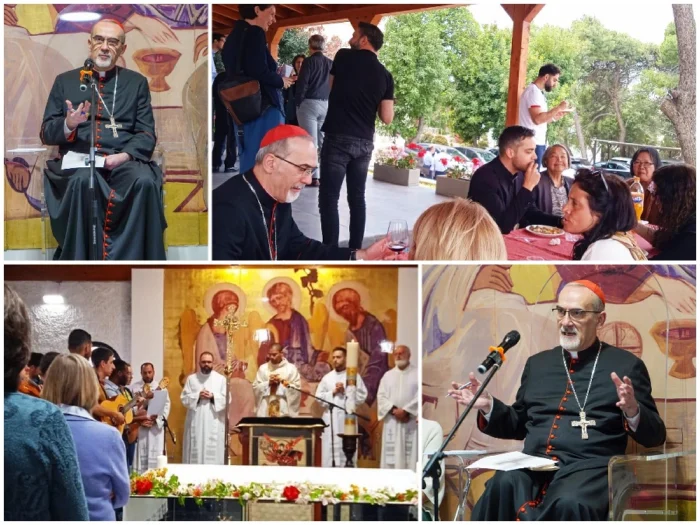 This spirit-filled gathering was a moment of grace. For those of us who were there, it was not a matter of quantity but quality and a decisive reason to be there to listen to the voice of the Church, of the Pastor of our Church in Jerusalem.
The letter of Latin Patriarch Pizzaballa is one that encourages us to form a “dialogue of life” rather than “a dialogue of elites” and to commit ourselves to daily practices that teach encounter and openness in lieu of isolation and seclusion.
The Patriarch, in Part One of his letter “reading the reality, considering the present,” writes:
“… for us Christians, dialogue is not an option, but an essential necessity. Our children – Christians and Muslims – go to school together, our sick are treated in the same hospitals, where no distinction is made on the basis of religious affiliation, whether Jews, Christians, Muslims, or those of other faiths. Our poor have the same needs. Without relationships with other faiths, we have no future. However, the challenge runs deeper: dialogue is our vocation and our destiny. It is one of the ways in which our faith manifests itself and is nourished.”
Dialogue –interfaith, ecumenical and interreligious– is echoed in the third part of the pastoral letter where the author articulates some pastoral implications for each and everyone of us to read and reflect and bring to life in our witnessing in the different areas where we are.
The approximately two hour-long sessions with Cardinal Pierbattista Pizzaballa unearthed serious concerns among us, as well as hopes and desires to move forward. Likewise, we received the assurance that we are not alone in this difficult, challenging journey and with hope, we must work together to “promote the art of encounter.”
Text and photos TA Bethlehem-Jerusalem.
 Published in News
Comments will not be posted automatically, they are subject to moderation.
The email address WILL NOT BE VISIBLE in the comments section.