



Over the last three years, the Pedro Poveda Foundation in Guatemala has organized various training workshops for teachers. Recently, a training course on developing reading comprehension in children was held at two schools in the municipality of Chinautla.
Blanca Fuentes, General Coordinator of the projects, and Tatiana González, in charge of teacher training, describe this and other similar initiatives.

The training program for the development of reading comprehension in children in Guatemala began in 2022. It continued in 2024 and is now also running in 2025. It is provided for teachers in public primary schools (ages 7 to 12, and 13 and older). This year, it has been provided in two schools funded by the Teresian Association's NGO, InteRed Foundation, and the Madrid City Council (Spain). In previous years other public bodies collaborated.
“During the training, the teachers worked on several topics. Reading comprehension is analyzed over five sessions and focuses on the methodology of the three stages of reading: before, during, and after. At the same time, awareness of the importance of reading comprehension and of encouraging reading are covered: that is, how we generate interest so that students read. This in turn increases their understanding of what they are reading,” explains Tatiana González.
In total, around twenty-five teachers have been trained during each course, benefiting between 400 and 450 children.
But what do teachers think of this training? According to Tatiana González: “They see it as innovative. Although the Ministry of Education is open to working on the three stages of reading, there is no personal guidance on how to implement the process. Teachers often have the materials but don't know how to use them, so what we offer them at the Pedro Poveda Foundation seems innovative because it is easy to apply and they can use the materials they already have. All this allows them to strengthen the processes.”
In this regard, Blanca Fuentes assures us that teachers are very happy and satisfied because, according to them, the Foundation's training processes enable them to "learn and discover new tools to help children improve their reading comprehension, which they then apply because there is follow-up in the classrooms on what teachers have gained in the learning processes.”
Environment and socio-emotional development
Regarding the environment in which they work, the coordinator explains that these are rural areas, far from the urban center, with specific problems unique to each community. Some are facing high levels of violence, difficult access, poverty, and schools built in red zones (neighborhoods deeply affected by gang- and drug-related violence). In other words, these are highly vulnerable areas with high rates of violence, populations that always have family problems, educational difficulties, and children who are highly likely to drop out of school.
For all these reasons, alongside these courses, socio-emotional development workshops are offered. “This has been a great contribution from the Pedro Poveda Foundation, because it is an area that is not addressed by the public sector, and after the pandemic, seeing how both teachers and children experienced it, we believed it was essential.” Last year, thirty-eight teachers participated in this training, and this year there were thirty-three, all from different primary and secondary schools.
In this case, participants work on different components related to emotions, from how to recognize them to transforming negative beliefs and taboos and managin emotions. The focus subsequently moves to motivation, empathy, and social skills such as assertive communication, active listening, and conflict resolution.
Community organization
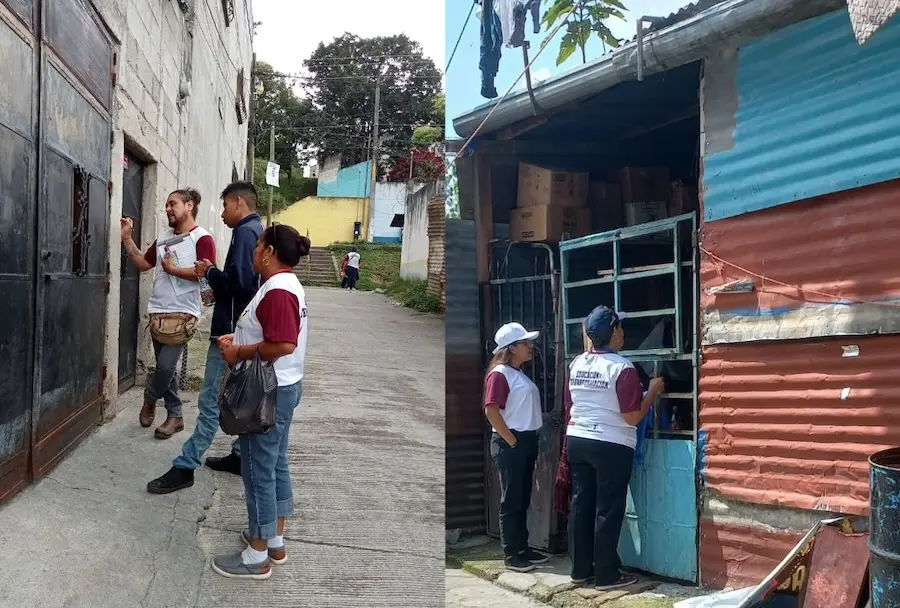
At the same time, for the past three years, the Pedro Poveda Foundation in Guatemala has been focusing on training leaders to contribute to the positive development of the community and the right to education for children. “In 2022, the Community Committee for the Protection of Children and Adolescents of Colonia San Julián was created, bringing together twenty women and men, young people, older adults, and seniors. It is an interesting intergenerational group that has grown stronger over time,” says Blanca Fuentes.
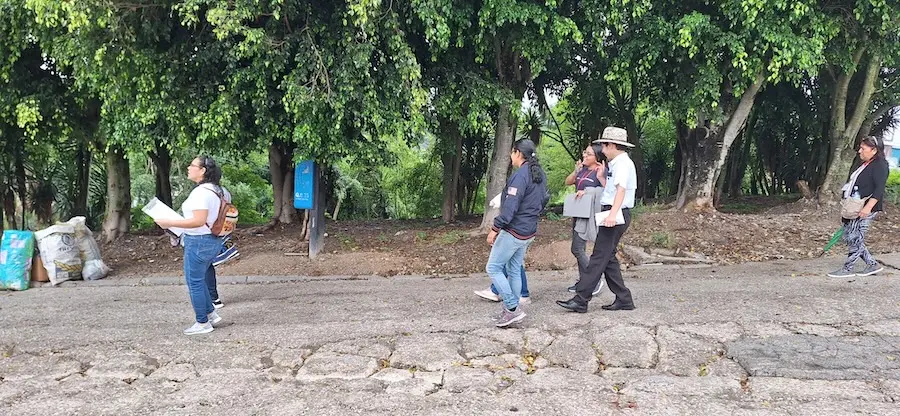
The first action taken by this committee was to identify children who were not attending school and how to motivate families to include them in the education system. Children and adolescents were located who had dropped out of school for two main reasons: the poverty in which many of them, and the pandemic, as its consequences dragged on and some had to go back to work, especially the older ones.
“In the first survey, forty boys and girls were identified in this situation, and we managed to get thirty of them into the formal and informal education systems, the latter of which is aimed at adolescents and young people and is an alternative to school education. However, in general, as these are children who have dropped out of school, they need a lot of follow-up and support to ensure they stay and continue,” says Blanca Fuentes.
This year, a new survey will be conducted in another community (about sixty boys and girls). And although the Foundation currently has a team of ten people (five of whom are technical staff), it is the committee of twenty people who follow up these young people. “We share out the younger ones among ourselves and follow up on them.”
In reality, the Pedro Poveda Foundation forms an even larger family, as a number of volunteers collaborate and support various community activities as well as activities in the library, the playroom, the computer room, and in the mobile playroom and library that they take to two communities.
TA Info. Teresa Rey.
TA Translation Team.
 Published in News
Comments will not be posted automatically, they are subject to moderation.
The email address WILL NOT BE VISIBLE in the comments section.