



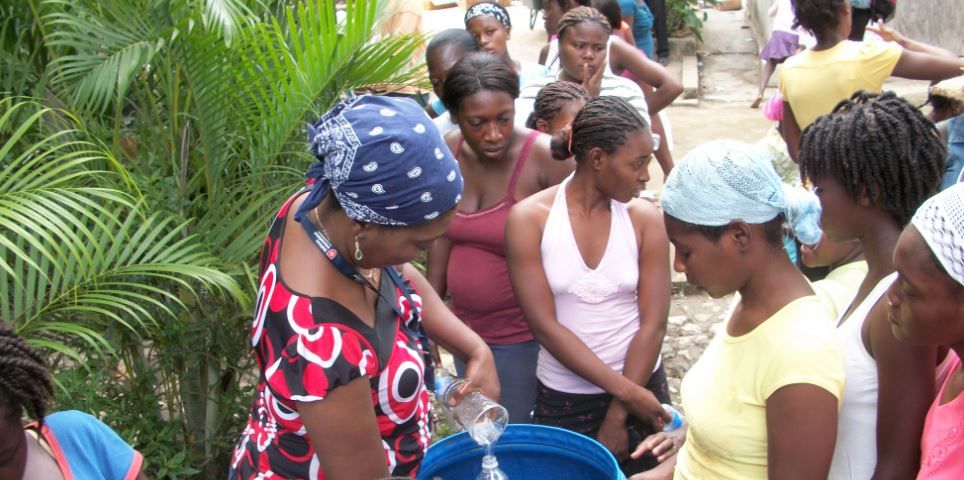
The NGDO InteRed held a webinar to raise awareness regarding the little-known situation in Haiti. Haiti is one of the countries where InteRed runs several projects, mainly on the border with the Dominican Republic. It has been supporting projects on the Dominican-Haitian border for years and works with local organisations, including the Teresian Association, to defend the rights of the Haitian population in the Dominican Republic.
 InteRed photo.
As seen by the experts
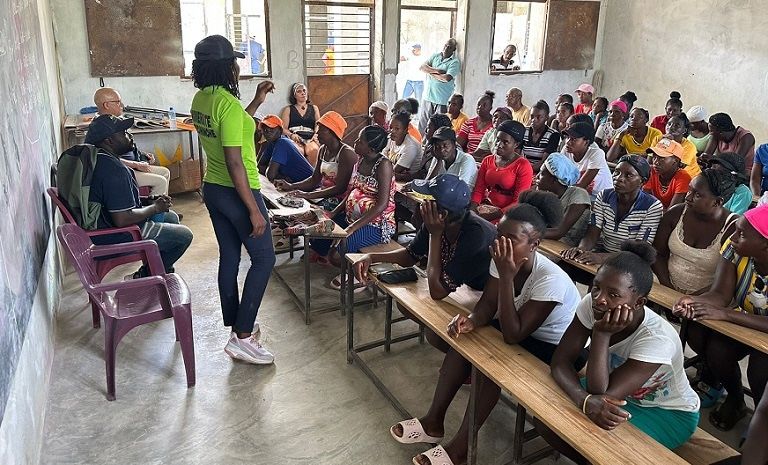
This meeting, entitled ‘Crisis and Resilience: Haiti and the Haitian population in the Dominican Republic’, which was attended by more than 40 people, is part of the series of webinars that InteRed holds periodically. The intention of these webinars is to provide information from experts on the situation in places where it carries out its activities.
As Ana Arancibia, Director of InteRed, explained at the beginning: ‘These meetings have become a space where the real situation in other regions of the world is rigorously presented. As an NGO, talking to experts helps us a lot, as it is a way of sharing information while at the same time encouraging reflection and analysis.”
However, the situation in Haiti is hardly ever reported in the media in Europe or on the American continent itself. ‘The information that is shown reinforces the colonial view, as is the case with African countries. That is why it is important to know for yourself what life is like in the country.’
 InteRed photo.
A realistic overview
A realistic description was offered by journalist Colette Lespinasse, correspondent of the Coordination Européenne-Haiti (CoEH), a platform of European NGOs dedicated to advocating for Haiti to the EU. Her first words clearly summed up the situation in Haiti: ‘The situation in Haiti is indeed very difficult.’
The journalist gave a succinct account of the island's history. After three centuries of slavery, the people of Haiti were the first in Latin America and the Caribbean to free themselves from colonial oppression and gain independence from France in 1804. However, this achievement had negative consequences for its economy, as France demanded a compensation payment, which at the time amounted to some 30 million dollars.
 In order to pay it off, the newly created country borrowed money from French banks, creating a ‘double debt’ that weighed Haiti down for a century. ‘This is how we entered into an infernal circle of indebtedness that we are still paying for today. It is what some historians have defined as ‘debt colonialism’ and its scars are still lingering, as it has hindered the country's development,’ Colette pointed out.
This state of affairs has continued throughout 220 years of independence, a period that has seen foreign interference (US military occupation, among others) and the plundering of resources, which continue to be two unchanging constants in the country's history.
‘Despite the fact that the Haitian people have fought hard and led many revolts, today we have a government that is against its people. It is made up of an elite that has no interest in the nation and supports the capitalist thieves,’ the expert continued.
Armed groups and migration
Colette Lespinasse also referred to the existence of armed groups that have aggravated the country's crisis and exacerbated poverty and economic problems. ‘They are made up of children and adolescents who have been abandoned and who do not go to school. They currently control more than 85% of the capital, and they kidnap, rape and murder with total impunity.’
All of this has had countless consequences: 800,000 displaced people; nearly six million people in a situation of food insecurity; the closure of 1,000 schools; more than 200,000 students out of school; recurrent violence against children and women.
Rural areas or the provinces serve as safe havens, but resources are scarce because access routes are blocked. This has led to many people leaving the country, but at the same time there are large numbers of deportations. According to the latest figures, since October 2024, 10,000 people have been deported from the Dominican Republic every week, she says.
In addition to all of this, there are a large number of stateless people of Haitian descent in the Dominican Republic who are not granted Dominican nationality. In fact, this is the origin of the Dominican-Haitian Women's Movement (MUDHA). Their aim is to improve quality of life for the population living in the areas traditionally occupied by Haitian migrants (known as ‘bateyes’). They live in very precarious conditions.
Currently, the Haitian migrant population in the Dominican Republic is facing serious violations of their citizenship rights because of high levels of racial discrimination and xenophobia. Edwin Paraison, founder and executive director of the Zile Foundation, an organisation specialising in Dominican-Haitian relations, was going to speak on this issue during the webinar, but in the end he was unable to do so due to health problems. In his place, Colette gave this brief presentation.
 InteRed photo.
Women and children
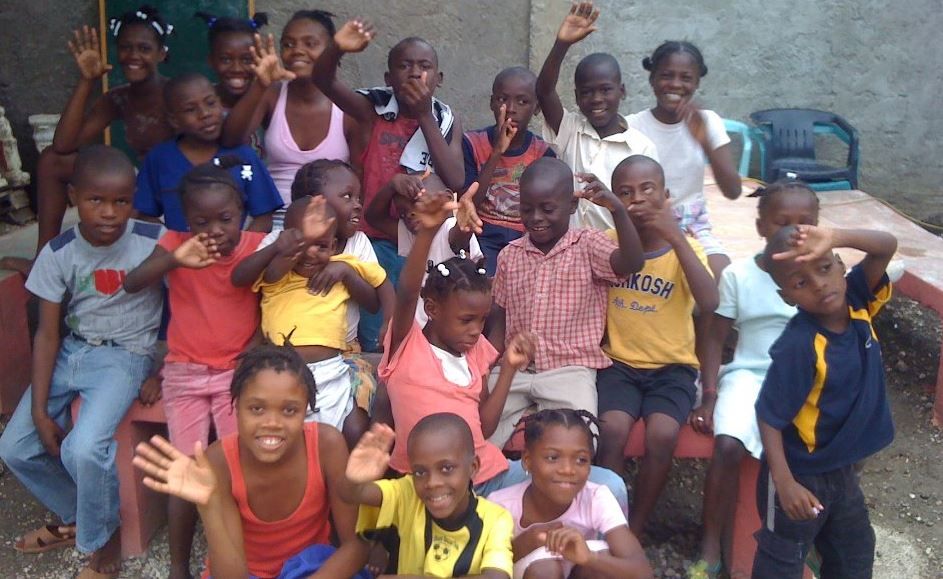
In the question and answer session, Colette answered questions related to migration and to how children and women are living in this environment. Regarding the children, she stressed that the situation is very serious, as many cannot play or go to school, and many girls are turned into sex slaves.
As for women, she said that they are the backbone of families, as about 40 per cent are single-parent families, i.e. made up of mothers and their children. ‘They are the ones who take care of food and education, etc. Most of them have had to flee with their babies in their arms. They have to use their imagination to survive. For me, Haitian women in this context are the heroines.’
Thanks to the journalist's presentation and the dialogue that followed, it became clear that Haiti is facing a serious political, economic and social crisis. Violence, food insecurity and lack of basic services affect most of the population. It currently ranks 158th on the UNDP's Human Development Index, making it the only country in all of Latin America and the Caribbean that falls within the range of countries with a low level of human development.
In conclusion, she noted that non-governmental organisations function best outside of the capital, Port-au-Prince, because people cannot gather or demonstrate there. ‘Organisations like InteRed can play a very important role, especially in education because there are many needs and you can help young people with professional training and emotional support, etc. We have hope and we believe that 2025 will be better.’
To become a member of InteRed, click here.
TA Info.
TA Traslation Team.
 Published in News
Comments will not be posted automatically, they are subject to moderation.
The email address WILL NOT BE VISIBLE in the comments section.