



Over 20 years ago, a project to help migrants was launched in Cicero, a town in the state of Illinois in the United States. It is the Pedro Poveda Educational Project (PEP), a community-based organization offering various educational programs. Its main aim is to improve the quality of life of its students. Since its inception in 2001, there have been many changes, but what matters is that this initiative has been transforming lives from the very beginning and continues to do so today.
The PEP was made possible thanks to the efforts of a group of people who identified a need in Cicero, a town just 13 kilometers from Chicago. Carmen Fernández Aguinaco and Arantxa Aguado, members of the Teresian Association, were living in the town at the time. ‘A group of Spanish teachers expressed their concern to us after realizing that there were many in their migrant pupils’ families who lacked a basic education. This meant that they could not help their children with their schoolwork, and they wanted to do something about it,’ says Carmen Fernández Aguinaco.
The beginnings
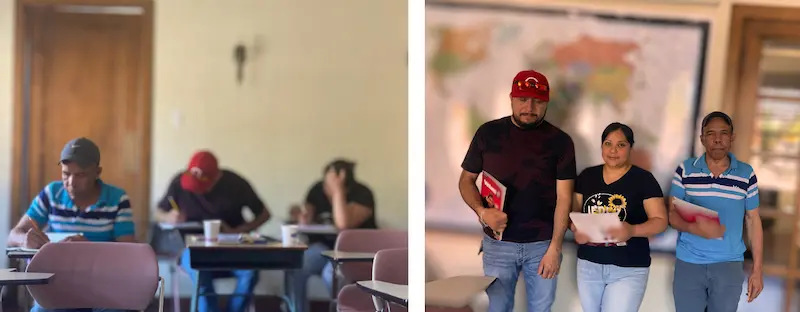
So, they set to work, but there was one problem: they lacked the space needed to hold the classes. One of the teachers happened to visit the Church of St Frances of Rome in Cícero – now known as St Mary Frances of the Five Wounds – and explained their plans to the parish priest, Mark Bartosic. As the priest had only just taken up his post and there was still ‘little going on’ in the parish, he welcomed the idea.
‘Once all the details had been sorted out, we put up a notice in the church saying that if anyone was interested in improving their reading and writing, they should speak to us. About 20 women turned up. Some could not read at all, whilst others had only very basic skills. And so we started the program with volunteers.’
After a while, a Mexican priest came forward asking for English lessons and enquired if they could help him. ‘So we added an English program, and later on four women came forward asking for training to obtain their GED (General Educational Development), a test required in the United States to obtain a qualification equivalent to secondary school, and we managed to set up another program which grew enormously.’ 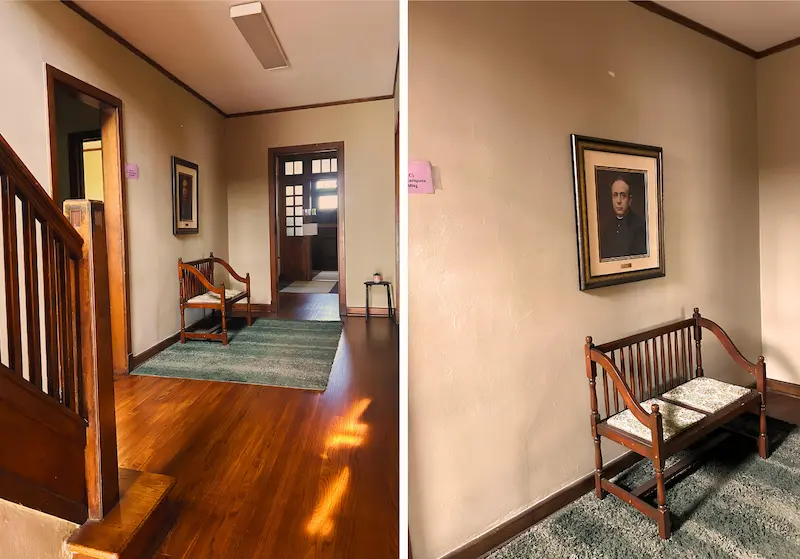
As demand was so high, in 2015 Bartosic offered them the opportunity to use a building that had previously served as the parish rectory. However, it needed to be refurbished. That is what they did: an ‘army of volunteers’ was formed thanks to the efforts of Evaristo Ocampo (currently a member of the TA), and they refurbished the house.
A couple of years later, with a new parish priest, Paul Stein, a new program proposal was drawn up called ‘Universidad de la Familia’. At the same time, in 2018, the Archdiocese of Chicago’s Catechetical Leadership program in Spanish sought the PEP’s help to launch a ‘Writing for Leadership’ program.
The pandemic and ICE
The onset of the pandemic in 2020 marked a turning point. ‘We tried to continue the programs via Zoom, but it was difficult. Between 2022 and 2025, an effort was made to rebuild the progr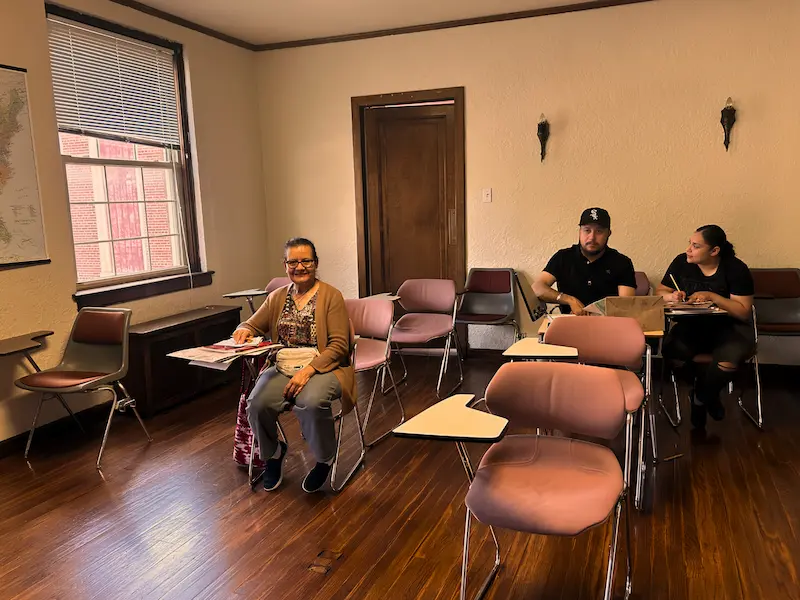 am, but there was no longer as much support from the parish and we could not publicize it as widely. People had lost interest,’ says Carmen Fernández Aguinaco.
Added to all this is the current situation in the country. It has become very difficult for migrants due to raids by US Immigration and Customs Enforcement (ICE). Furthermore, it is important to note that in Cicero, 87.5 per cent of the population is of Hispanic or Latino origin, according to the US census (July 2025).
Another member of the TA, Beth Alcazár, who currently teaches English at the PEP, says that many migrants are afraid to go out onto the streets. This is a point also made by Alexandra, who has been taking English lessons for a year and comes from Mexico.
Although the situation regarding ICE raids seems to have calmed down recently, the threat remains, as everyone we spoke to agrees.
What lies ahead
Despite all these difficulties, the PEP continues. Teresa Ocampo is the current coordinator and TA member. She teaches English and, although demand has fallen, she explains that they still need volunteers because requests for classes somet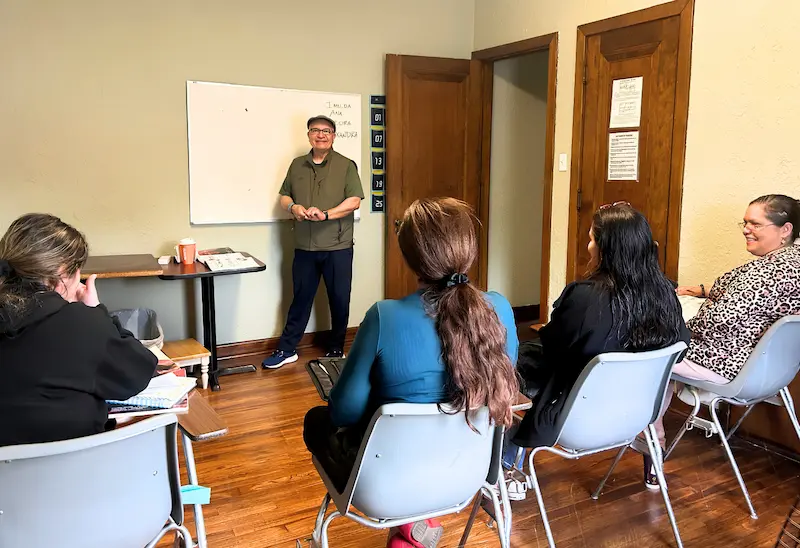 imes arise and they have to find qualified people.
Since 2002, the PEP has benefited around 1,500 people, awarded approximately 300 GED certificates, and enabled some students to go on to university.
Gella Cell, a volunteer English teacher, says that she finds it very rewarding to take part in this social project run by the Teresian Association as a volunteer. Imelda López, a Mexican woman taking English lessons, explains that she considers the project to be a very good option. Meanwhile, Alexandra adds that the teachers are very approachable.
At present, ‘the PEP’s philosophy is to continue addressing immediate needs until the situation stabilises,’ concludes Carmen Fernández Aguinaco.
TA Info.
 Published in News
Comments will not be posted automatically, they are subject to moderation.
The email address WILL NOT BE VISIBLE in the comments section.