



On 28 May, InteRed organised a webinar entitled, “Armed confrontation in the north-east of the Democratic Republic of Congo (DRC), an invisible conflict”. The aim was to examine the main issues behind the armed conflict in the country and the impact it is having on its most vulnerable communities.
Around 90 people attended this virtual event. It featured presentations by two experts: Josep María Royo Aspa, a researcher for the programme ‘Conflict and Peacebuilding’ being run by the School for a Culture of Peace in the Barcelona Autonomous University, and Mónica Corna, legal representative in DR Congo for the Italian NGO, Volontariato Internazionale per lo Sviluppo (VIS), who has been living in the country for more than 20 years.
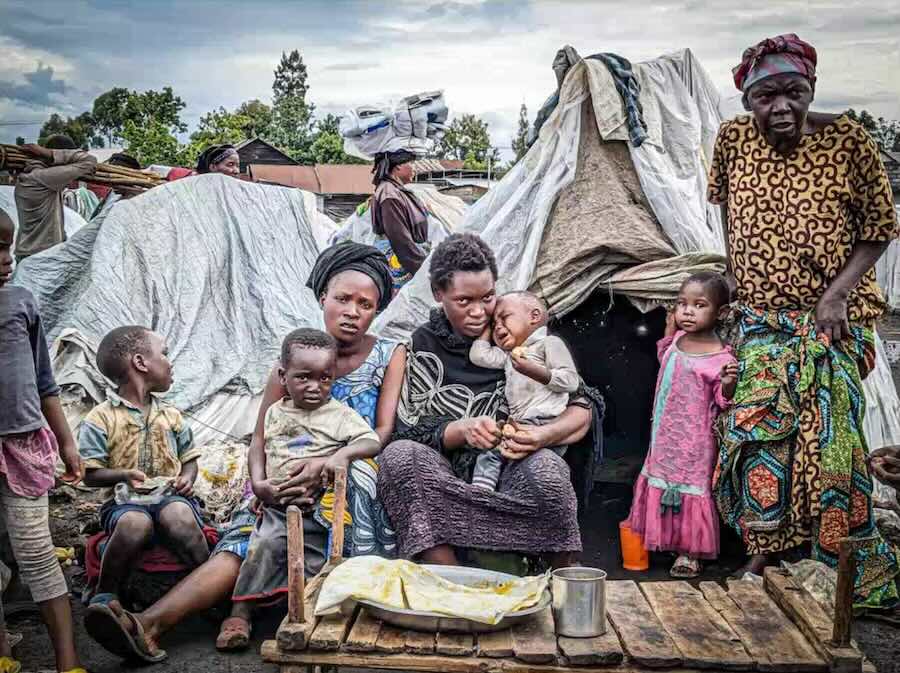
Unnoticed by the media
The event was moderated by Andrés Díaz, the InteRed Programme Technical Officer. This NGO has been supporting projects in the North Kivu region since 2007 where more than 7 million people have died as a result of the conflict. This situation has provoked the largest, most complex and prolonged population movement in Africa with the displacement of 6.2 million people.
Even so, it is barely reported in the media. “I have only found 20 to 25 reports about it in the whole year,” said the moderator.
Background and causes of the conflict in Congo
Josep María Royo Aspa then gave the basic outlines of the situation through a precise historical and geopolitical overview.
He also pointed out that the DRC has an area of 2.3 million km2, 11,000 kilometres of borders and is surrounded by nine states. “This causes systemic difficulties in building a state,” he said. 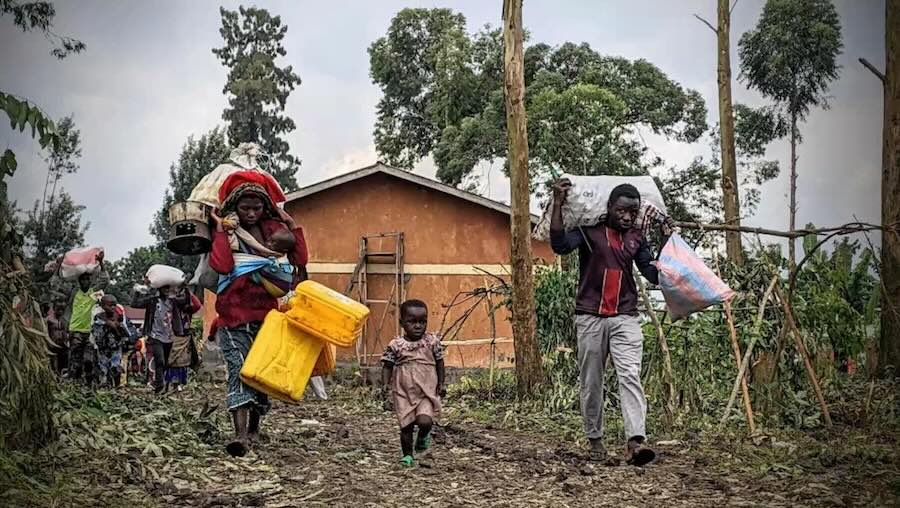
In addition, Angola, Rwanda, Burundi and Uganda have been involved directly and indirectly in the country's insurgencies. These include the Rwandan genocide (1994) and the Great African War (1998), among others.
In 2008, a peace agreement was reached, but the situation is now very tense and similar to that of 1998.
The root causes of what is happening in the DRC are the same as 26 years ago. “First there is the exploitation of natural resources: it is rich in gold, coltan, uranium, etc. Because of this, companies and nations from all over the world are getting rich at its expense and there is corruption on the part of the Congolese government.
The other issue is that land use and ownership is a focus of conflict.
There are also many refugees from Rwanda and Burundi in Congo who are not recognised by the DRC. Tensions are growing as the DRC accuses Rwanda of supporting an armed group, the March 23 Movement (M23) in North Kivu.
The people
Monica Corna went on to say that the situation is very complicated. “The eruption of a volcano in the area has led to an increase in refugees. There are seven million people without homes, there are diseases such as Ebola, and there has been no humanitarian aid for a year.”
She pointed out, however, that the people are very resilient, although the situation has worsened for women with an increase in sexual violence.
The United Nations was also discussed as it has been discredited by the fact that there are so few soldiers (some 20,000), and that some have been responsible for sexual abuse and human rights violations. Josep also pointed out how, at the same time, there are certain interests that seek to discredit the work they do.
In the final part of the discussions, Jacinthe Nkongolo, a TA member and delegate in Congo, spoke about the work being carried out by InteRed and other NGOs.
Info IT.
TA Translation Team.
Photos taken from Monica Corna's presentation.
 Published in News
Comments will not be posted automatically, they are subject to moderation.
The email address WILL NOT BE VISIBLE in the comments section.